Showing posts with label technology. Show all posts

Sep 17, 2021

Remote Reading

Yin Liu

A student examines the 15th-century Brendan Missal, University of Saskatchewan Special Collections, 2017.

The University of Saskatchewan dairy herd. Lots of cows, not much parchment. 
When COVID-19 restrictions made most of us in Canada stay at least 2 m away from each other, shut down international travel, and compelled many academics to work from domestic spaces frequently traversed by cats and children, manuscript scholars faced, in a heightened form, a paradox that we have been grappling with ever since digital technologies gave us access to manuscript images online. On the one hand, someone like me, who lives in the middle of Canada surrounded by a vast expanse of farmland and a vast absence of medieval manuscripts, has had my teaching and research practice revolutionised by the wonderful array of manuscript images freely available on the Web, thanks to the generosity of many holding institutions and their funding sources. On the other hand, any manuscript scholar knows that staring at an image on a screen is not the same as holding a manuscript in one’s hands. Digital technology opens up some ways of approaching medieval documents, at the cost of shutting down others.

Aug 15, 2020

Medieval Codes Update: reflections on the long view

 Yin Liu

I have not posted to this website in a very long time. My thanks to the student researchers who have held the fort while I was sidetracked by other things. But it is about time I popped back into this website to explain what is going on.

Perceval and recluse
Detail from BnF MS Fr. 343, fol. 21v: a knight visits a recluse.


The Medieval Codes project continues. For four years it was generously funded by an Insight Grant from SSHRC, which enabled me to support a productive and keen team of student researchers. Many of them are still connected to the project as volunteers, and I consult some of them from time to time, even if I no longer have funds to pay them. Not only have they contributed content to this website, they have, much more, added project assets that you can’t see, and amassed a large pile of material that will keep me occupied for years to come. Their interests have also led me to areas I would not have ventured into otherwise, sometimes areas I didn’t know existed. I am immensely grateful to them all.

After the SSHRC grant ended and I was no longer bogged down by grant administration, I continued to be bogged down by other forms of administration. So work on this project has proceeded very slowly. And then, in March 2020,  community transmission of COVID-19 was confirmed in Canada, where I live.

Aug 19, 2015

Using Technology

The typographically attentive reader will notice that the title of this post italicises the word technology, and thus that the phrase does not refer to using technology itself, but to using the word technology. A word that refers to itself should be distinguished from a word that refers to a concept (in philosophy, this is called the use-mention distinction), and the convention in print has been to put a word that refers to itself in italics or quotation marks: e.g. technology or ‘technology’. This convention is, itself, a result of technological innovation, and specifically of print technology. Italics were originally separate typefaces, but eventually were mixed in with roman fonts for various purposes: emphasis or variety, for example. I don’t know when italics were first used to indicate words that refer to themselves, but certainly this convention was not common before the 1700s, perhaps not before the 1800s.

Answere of Master Isaac Casaubon to the epistle of the most reuerend Cardinall Peron (William Aspley, 1612)

For example, here is the first use of the word technology recorded by the Oxford English Dictionary; it is from the English version of Isaac Casaubon’s Answere of Master Isaac Casaubon to the epistle of the most reuerend Cardinall Peron. This whole section has been printed in an italic font, and the word technology has not been made distinct in any way, although the proper name ‘Gregorie Nazianzen’ has been set in roman type. And, although we might find a certain charm in the idea of converting ‘Theologie into technology’, what Casaubon meant by technology was not something like an Electric Monk, but ‘learned, or artificiall discourse’ – the original meaning of the word. Thus technology originally meant ‘technical language’, then ‘the study of technical knowledge and skills’. It was not until the early 1800s that technology came to mean (in the words of the OED, s.v. technology sense 4b) ‘the mechanical arts and applied sciences collectively’. As late as 1934, Lewis Mumford’s classic study in the history of technology did not use the word technology in its title but an alternate term: Technics and Civilization.

Apr 6, 2015

The marvels of Hesdin

Now that April 1 is well past, it’s probably safe to try this little diversion about something weird and wacky from the Middle Ages: the entertainment mechanisms of Hesdin Castle.

Image: Rob Zeldenrust.
[Image, left: detail of Wedding Party at the Park of Hesdin, 16th-century copy of a lost original possibly by Jan van Eyck.]

Hesdin was built by Count Robert II of Artois (1250-1302). It was, sadly, demolished in the 16th century. Our fullest account of the contraptions installed in the castle and its park comes from the accounts of the dukes of Burgundy, who spent a greal deal of money on the renovation and upkeep of Hesdin. In particular, an entry from the accounts of 1432 describes in detail the mechanisms on which Duke Philip the Good of Burgundy spent 1,000 livres to renovate or install, paid out to valet-de-chambre and painter Colard le Voleur:

Jul 25, 2014

Augmenting human intellect


Medieval mouse, Museum Meermanno, MMW, 10 B 25, Folio 24v
Engelbart's mouse, 1963

That’s the title of one of the foundational essays in the history of computing: Douglas Engelbart’s Augmenting Human Intellect: A Conceptual Framework (1962). Engelbart is mostly known today as the inventor of the computer mouse, but this device was only one component of a much more radical, pioneering vision for using computers as tools to enable human beings to perform complex tasks – not just as giant calculators, which was what computers were being used as in the 1960s, but as partners with human beings in a symbiotic relationship between people and machines.

Jun 21, 2014

Why the Digital needs the Humanities


University of Saskatchewan MS Ege 15 (verso): the Beauvais Missal
To my knowledge, I have made people cry only twice by talking about medieval studies. (I am not counting students upset about their grades, which is a different story, or colleagues losing their minds with boredom at the back of the room during conferences.) Both times, I was speaking about the University of Saskatchewan’s box of medieval manuscript leaves from the Ege collection, and trying to explain why we should still be interested in pages ripped out of books made hundreds of years ago, even if most people can no longer read them and they are no longer used for the purposes for which they were intended. The first talk was to a mixed group of academics, students, and members of the general public, at the University of Saskatchewan in 2005; the second was to an audience of art librarians and archivists at a conference in Banff, Alberta, in 2006. Both times, people came up to me afterwards and confessed that they had been moved to tears – not by my eloquence, alas, but rather by the very idea that human skill and dedication could produce objects (that is, medieval liturgical and biblical manuscripts) of such beauty and meaning, even when most modern readers could not really comprehend the full scope of their meaning.

Apr 14, 2014

Calculation to communication

Image: © Marie-Lan Nguyen / Wikimedia Commons / CC-BY 2.5
Do you remember when mobile phones were actually used as telephones? That is, people put them next to their heads and used them to talk to other people at a distance. But now, of course, your mobile phone (unless you have a very very cheap model) does a lot of other things as well. Phones are used as cameras, maps, notebooks, recipe collections, timekeeping devices, compasses, flashlights, mirrors, radios and audio players, reading platforms, organisers, entertainment centres, tourist guides . . . At some point, a significant transition took place when a tool designed for one use (real-time voice transmission over distance) acquired other uses. These shifts in technology use can be deeply transformative, not only affecting the physical design of the technology so used but also the social practices related to that technology. However, shifts in technology use are often overlooked when we focus simply on ‘inventions’ – the physical devices themselves – without considering what people actually do with them.

Oct 4, 2013

Lost in Information


Where is the wisdom we have lost in knowledge?
Where is the knowledge we have lost in information?
    - T. S. Eliot, Chorus I from The Rock

. . . literacy is still the only bulwark against the dissolution of language into ‘information systems.’
    - Ivan Illich and Barry Sanders, Preface to ABC: The Alphabetization of the Popular Mind

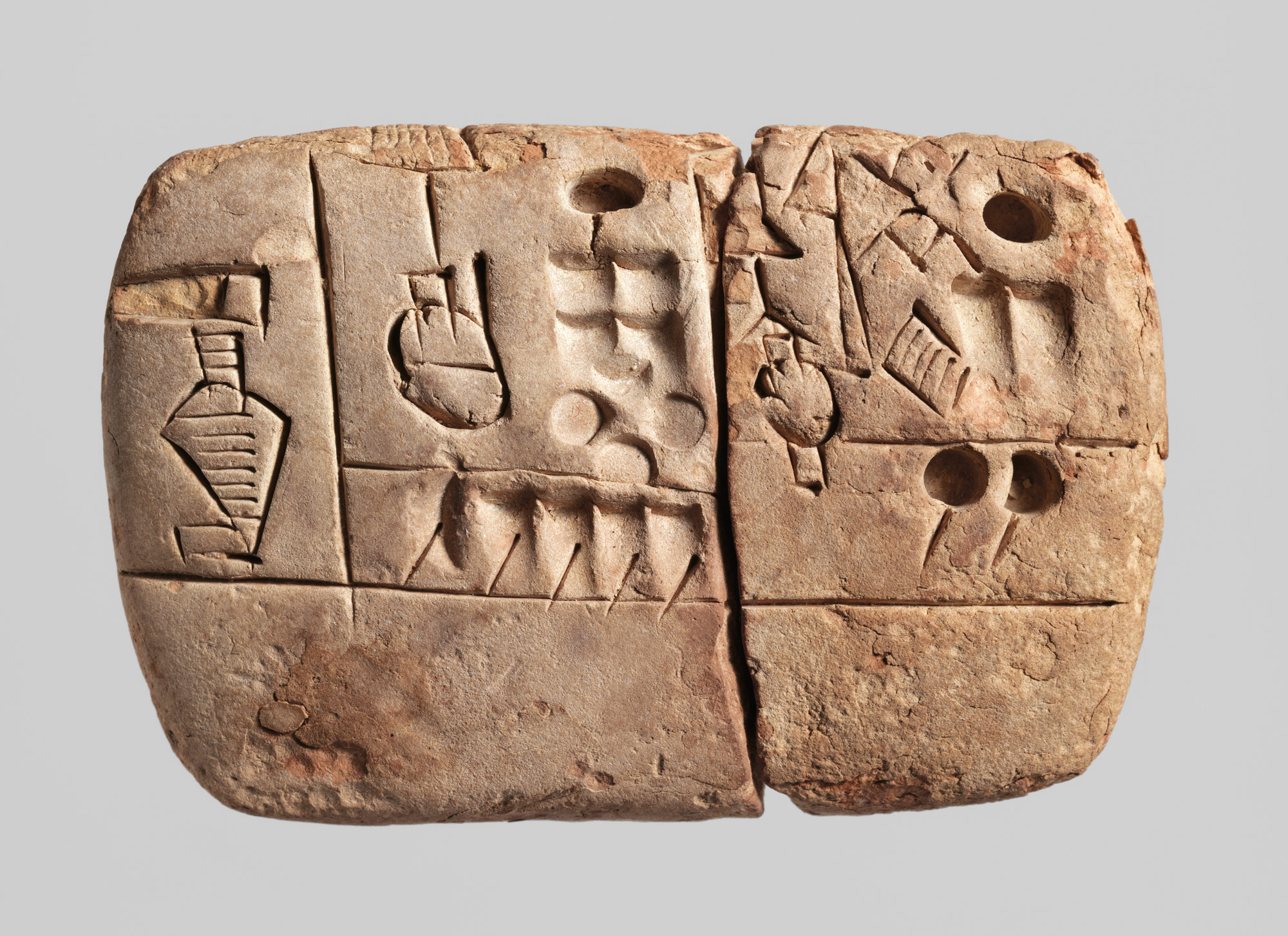
The technology that emerged to meet those needs – writing – filled a prosaic but essential purpose: accounting. The impetus behind its invention was not a desire to faithfully record language, but to record trade transactions, crop yields, and taxes – to record and preserve information, not language.
    - Amalia E. Gnanadesikan, The Writing Revolution: Cuneiform to the Internet

Jun 18, 2013

Defining the terms

In this inaugural post for the Medieval Codes project, it seems appropriate to lay out what I think we are trying to do and what we're not trying to do.

When I google 'medieval codes', the first results are gaming sites. So I'll start with this: we are not offering cheat codes for 'medieval' games. Sorry.

  • We are investigating ways in which medieval people, writing English texts, organised, stored, transmitted, and searched for information. Some of that information might conceivably be about combat games that actual medieval people played, but you may have to read a manuscript to get there.
The word 'codes' also suggests cryptography or secret writing, but that's not our primary concern either.
  • We are interested in medieval text forms as communication technologies. In societies where literacy was less common and had different social implications than it does in today's industrialised nations, how did medieval people learn, negotiate, experiment with, and develop the technologies of writing?
Although we have chosen the word codes deliberately to recall the most common context of that word today, digital environments, the project is not primarily about encoding medieval texts in digital forms.
  • We start with the observation that medieval texts are already encoded, by virtue of being written down. A better understanding of, and sensitivity to, the ways in which they were first encoded is important when we recode or remediate these texts into other forms -- print or digital.
When we suggest that medieval English texts were a form of code, we are creating a mental tool for analysis, a model. Since the early 1600s, model in English has meant ‘A three-dimensional representation, esp. on a small scale, of a person or thing or of a projected or existing structure; esp. one showing the component parts in accurate proportion and relative disposition’ (OED s.v. model, sense 4a).
"We are interested in medieval text forms as communication technologies."
In various disciplines that involve design, such as architecture or sculpture, such models are common tools. In the sciences, model came to mean something more abstract: ‘A simplified or idealized description or conception of a particular system, situation, or process, often in mathematical terms, that is put forward as a basis for theoretical or empirical understanding, or for calculations, predictions, etc.; a conceptual or mental representation of something’ (OED s.v. model, sense 8a). More succinctly, ‘to model is to create a useful fiction’ (McCarty 2008, p 259). Modelling is thus a central intellectual tool of the sciences, including computer science, and theories frequently involve or are expressed as models. For example, our understanding of atomic structure throughout the history of 20th-century physics proceeded as a series of models.

Digital humanities has often been described as modelling (Unsworth 2002, McCarty 2004), insofar as this activity involves creating digital representations of the subject matter of humanities research – texts, for example. This project is a modelling exercise. Analogies between medieval texts and modern (especially digitally mediated) texts will inevitably arise. The purpose of the model, however, is not to make facile comparisons, but to engage in a historically sensitive investigation of the ways in which the encoding of information has developed in English texts, from the Middle Ages to the present. In particular, we are looking for:
  • Aspects of medieval code that have been remarkably persistent in many different contexts. One example is the Roman alphabet, originally designed to encode Latin, adapted to English, and so basic to our experience of written English today that we think of it as natural, although it isn't.
  • Aspects of medieval code that tended to be lost in modern media, especially in print environments. One example is devices for qualitative visual indexing, such as visual art (decorated capitals and the like) that had a search function as well as an ornamental one.
  • Ways in which the analogy between medieval text and modern (digital) codes breaks down. The most obvious difference is that medieval text was intended to be read by humans, whereas modern computer code is meant to be read by machines. This is not a trivial difference, especially at a time when many humans are reading text that is mediated by machines. Ultimately, this project is an exploration of some of the very complex and far-reaching implications of technology.
At this stage of the project, besides messing around with this beautiful website (comments and suggestions welcome), we are pursuing two kinds of research simultaneously. I'm working on clarifying terminology such as model, text, information, and code for the purposes of the project. Ben is developing a case study that will apply the model to a specific feature of medieval textuality. We'll try to post here regularly, every week or so. Come back for more.

Yin Liu